Utilizing methane gas from anaerobic digesters (AD) induces energy savings and reduces wastewater industry greenhouse gas impacts. Methane is an inevitable byproduct of anaerobic digestion and provides wastewater treatment plants with valuable opportunities to reduce their fuel costs. As the benefits of methane production
become more recognized in wastewater environments, the prospect of maximizing this energy source through biological optimization gains greater attention.
ProBiotic Scrubber® II (PBII) by BioLynceus® contains highly concentrated live cultures of microbiology that is used to optimize wastewater treatment plants. The following case study compares the biochemical methane potential (BMP) of PBII against activated sludge from a highly monitored research digester.
To test the BMP of these substances as digester seeds, the serum bottle method was employed with triplicate samples for each seed source. The test bottles contained high strength brewery wastewater inoculated with three different treatments, anaerobic digester sludge (GADS) with a food to microbe ratio (F:M) of one, PBII with a F:M of one, and PBII (PBS0.5) with a F:M of two.
The volume of seed added to each bottle was determined by the proportions above, and the total volume encompassing the seed, wastewater, and five mL nutrient solution equaled 90 mL. A blank containing the corresponding treatment seed without the addition of wastewater was prepared for each bottle. The bottles were incubated for 50 days.
During the incubation period, the methane yield at standard temperature and pressure (STP) and total biogas yield at STP were monitored. The biogas and methane yield from the test bottles were corrected by subtracting the gas production of each complementary test blank.
On day 50, the average methane yield from the ProBiotic Scrubber® II treatment was 3.6 mg/g COD greater than from the GADS treatment (Figure 1). The PBII treatment produced the smallest 50 day average methane yield in the study which was expected considering the concentrations of biomass in the bottles were reduced by half. Using PBS1 as digester seed promoted increased methane production at the end of the BMP test when compared to the research sludge.
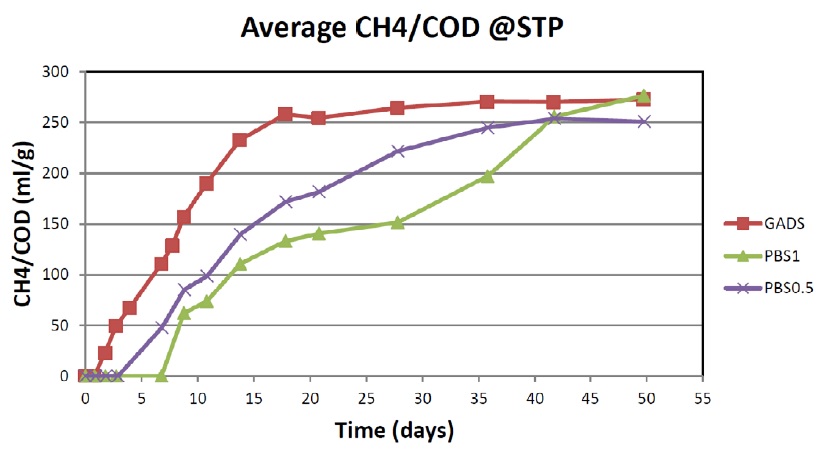
Figure 1. Averaged methane yield from the GADS (red), PBII (green), and PBS0.5 treatments (purple) at three to five day increments over 50 days.
Additionally, the total biogas yield on day 50 was greatest from the GADS bottles. Because the sludge produced more biogas and less methane than the PBS1 treatment, the study exhibited that the sludge off gassed higher quantities of carbon dioxide and other trace gases than PBS1. The PBS0.5 bottles produced the least amount of biogas in
the study. Using BioLynceus’ product as seed optimized methane availability and minimized the formation of gases unsuitable for energy production. The testing report provided by the Anaerobic Technology Laboratory explained.