
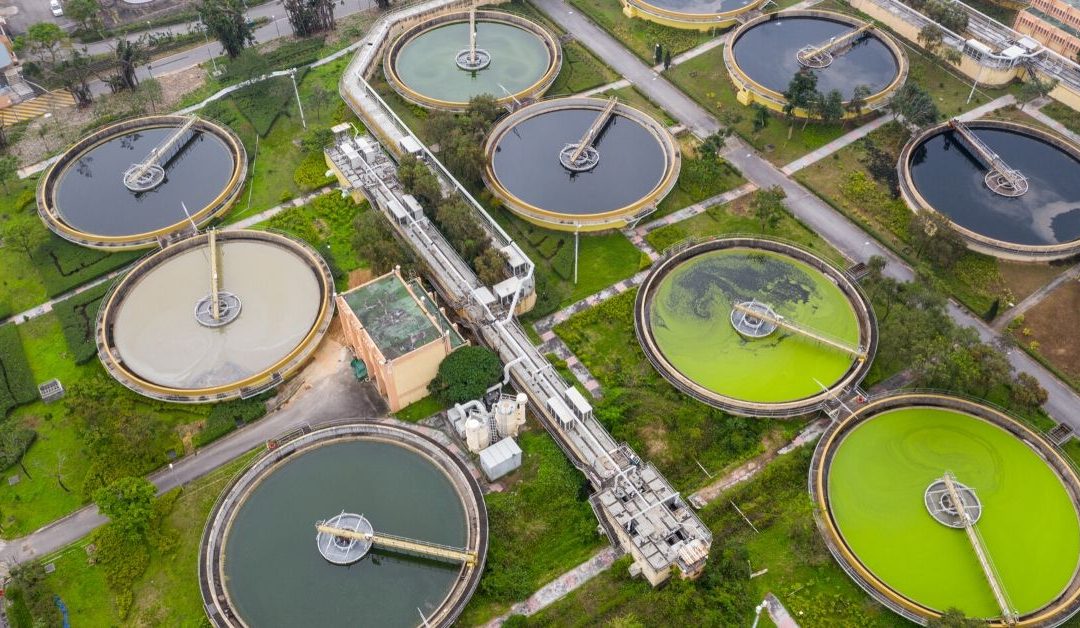
Mechanical Wastewater Treatment Plant: 0.06 MGD
Wastewater treatment facilities that receive discharges from industrial, commercial, and other human-related sources can be vulnerable to unexpected toxic loads.
These toxic discharges may occur sporadically, but even a short-term event can significantly disrupt the microbial biomass responsible for biological wastewater treatment.
How Toxic Loads Affect Biological Wastewater Treatment
Toxic compounds can interfere with microbial cell structure and biological activity within a wastewater treatment system.
As discussed in Michael Gerardi’s Wastewater Bacteria, toxic substances in wastewater can inhibit important biological treatment processes, including:
- Biological oxygen demand (BOD) removal
- Nitrification
- Organic matter degradation
- Biomass growth and stability
When a toxic event damages the existing microbial community, treatment efficiency may decline rapidly and make it difficult for the facility to meet discharge requirements.
Restoring Biomass After a Toxic Shock
Following a toxic shock, wastewater operators may need to rebuild the biological community before normal treatment performance can resume.
Bioaugmentation can be used to introduce a concentrated and diverse population of beneficial wastewater microorganisms into the treatment process. This approach can help reestablish biomass and support the recovery of biological treatment.
Using ProBiotic Scrubber® II for Wastewater Plant Restart
The following case study describes the use of BioLynceus® ProBiotic Scrubber® II (PBII) as a biological seed to restart a 0.06 MGD mechanical wastewater treatment plant (MWTP) following a series of toxic loading events.
The treatment program was designed to help restore a healthy microbial population and support the recovery of BOD removal, nitrification, and overall wastewater treatment performance.
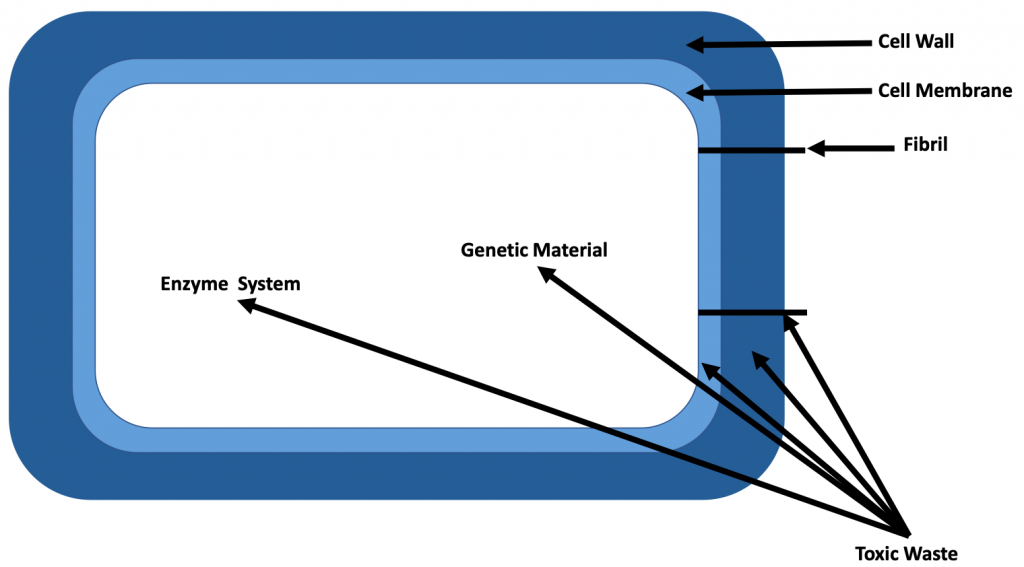
Figure 1. Toxic impacts on a bacterial cell. Toxicity inhibits cellular structure and activity. Fundamental cell structures inhibited by toxic waste include cell wall, cell membrane, fibrils, and genetic material. Essential cellular activities impaired are enzymatic activity and regulation of genetic material.
Toxic Loading at a 0.06 MGD Wastewater Treatment Plant
A 0.06 MGD mechanical wastewater treatment plant (MWTP) in Utah was experiencing weekly toxic loading events that repeatedly disrupted the biological treatment process.
The facility served a large resort that received thousands of visitors each year, along with a local distilling operation.
High-strength wastewater from these sources made it difficult for the plant to maintain a stable and healthy microbial population.
High BOD, FOG, and Chemical Loads Disrupt Biomass
The resort contributed wastewater containing elevated levels of:
- Biological oxygen demand (BOD)
- Fats, oils, and grease (FOG)
- High organic loading
The distilling operation also contributed chemicals and surfactants that further inhibited the biological treatment process.
These combined wastewater loads repeatedly disrupted the plant’s biomass and prevented a stable microbial community from becoming established.
Without reliable biological treatment, the facility experienced frequent increases in effluent BOD and ammonia (NH₃) concentrations.
“I am extremely pleased with the BioLynceus® product and have seen a huge change in effluent quality.”
— Plant Manager
Activated Sludge Seeding Became Costly and Difficult
Each time a toxic loading event damaged the biomass, plant operators brought in activated sludge from a neighboring wastewater treatment facility to restart the biological process.
Over time, transporting and applying activated sludge became both financially and operationally demanding.
Facility management began searching for an alternative method of wastewater plant seeding and biomass recovery.
After reviewing previous BioLynceus® wastewater treatment applications, the facility selected ProBiotic Scrubber® II (PBII) as part of its recovery strategy.
Using PBII to Restore Biological Wastewater Treatment
Following a toxic loading event or influent overload, operators applied a daily dose of PBII directly to the MWTP aeration basin for approximately three to five days.
The treatment introduced additional nitrifying and organic matter-degrading bacteria to help rebuild the biological community.
This bioaugmentation program helped improve:
- Effluent BOD concentrations
- Ammonia removal
- Biomass recovery
- Biological treatment stability
- Recovery time following toxic loading events
Faster Biomass Recovery with Bioaugmentation
Plant operators observed that the system recovered more quickly from toxic loading events when PBII was used for bioaugmentation.
After several successful applications, the Plant Manager reported:
“I am extremely pleased with the BioLynceus® product and have seen a huge change in effluent quality.”
Using ProBiotic Scrubber® II provided the facility with an alternative to repeatedly hauling activated sludge from another treatment plant.
Supporting Wastewater Plant Recovery After Toxic Upsets
BioLynceus® ProBiotic Scrubber® II provides a diverse microbial population designed to support biomass recovery, BOD removal, nitrification, and biological wastewater treatment following toxic loading events.
1 Gerardi, M. (2006). Wastewater Bacteria. Hoboken, New Jersey: John Wiley & Sons, Inc.Pp.173-203. https://www.amazon.com/Wastewater-Bacteria-Michael-H-Gerardi/dp/0471206911