
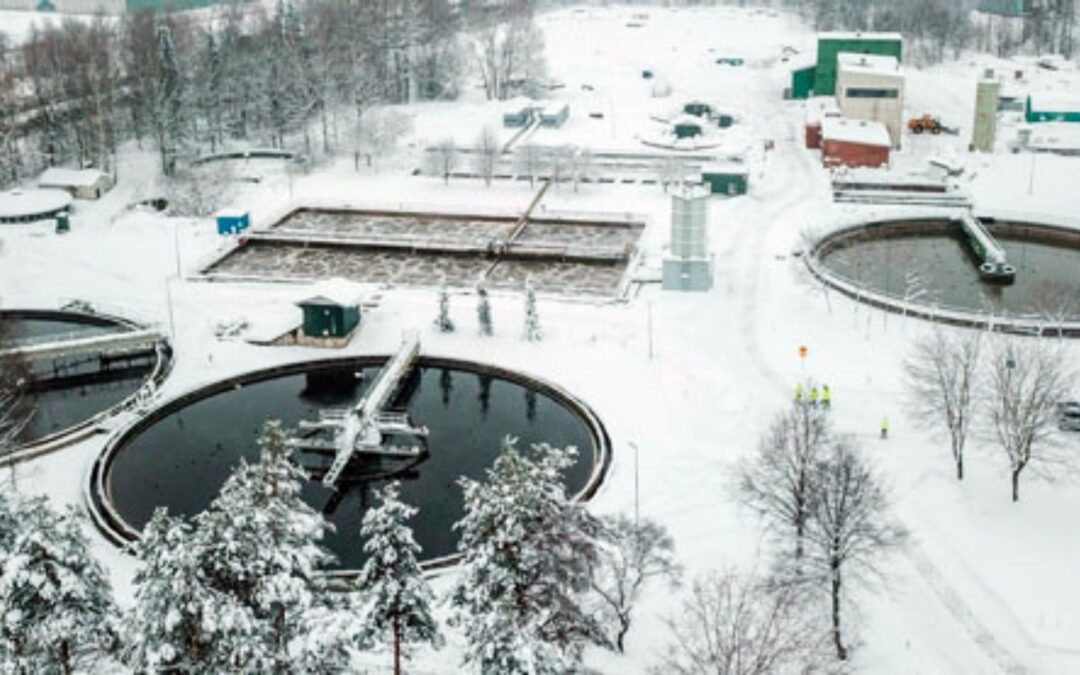
How Cold Water Temperatures Affect Wastewater Bacteria
One thing is certain in biological wastewater treatment: when water temperatures drop, microbial activity changes.
For more than 25 years in the environmental and wastewater industries, I have repeatedly encountered the idea that treatment plants need completely different bacteria—or “bugs”—for winter and summer.
Temperature absolutely affects how quickly microorganisms grow and metabolize wastewater contaminants. However, that does not necessarily mean a treatment system needs one bacterial product for summer and another for winter.
Understanding how cold temperatures affect wastewater bacteria is more important than simply changing products with the seasons.
How Temperature Affects Wastewater Microbiology
Temperature influences nearly every biological process in a wastewater treatment system.
As wastewater temperatures decrease, many microorganisms:
-
Grow more slowly
-
Reproduce less frequently
-
Metabolize organic material more slowly
-
Require longer treatment or contact times
-
May become dormant under unfavorable conditions
Processes such as nitrification can be particularly sensitive to cold temperatures because nitrifying microorganisms grow relatively slowly even under favorable conditions.
Biological phosphorus removal can also change with temperature because the activity and competition among phosphorus-accumulating organisms and other microorganisms are affected by environmental conditions.
The important point is that microbial communities respond to temperature—but temperature is only one factor affecting wastewater treatment performance.
Do You Really Need Separate Winter and Summer Bacteria?
Over the years, wastewater operators have been offered products marketed for nearly every possible situation:
-
Winter bacteria
-
Summer bacteria
-
Grease-degrading bacteria
-
Sludge-reducing bacteria
-
Collection-system bacteria
-
Grease trap bacteria
-
Lift-station bacteria
There are legitimate situations where specialized microorganisms can be useful. For example, microbial communities selected for petroleum hydrocarbon remediation may differ from those used primarily for municipal wastewater treatment.
However, operators should understand exactly what they are purchasing and what biological function the product is intended to support.
The presence of multiple product formulas does not automatically mean every wastewater system requires a different microbial product for every season or treatment location.
Cold Weather vs. Frozen Microbial Products
Another important distinction is the difference between cold wastewater temperatures and a microbial product that has been allowed to freeze.
A label stating “Do Not Freeze” does not necessarily mean the microorganisms cannot function in cold wastewater.
Instead, the warning may relate to product storage and microbial viability.
Freezing a liquid microbial product can:
-
Damage the container as the liquid expands
-
Reduce microbial viability
-
Alter the diversity of the microbial population
-
Affect product consistency after thawing
For this reason, microbial products should be stored according to the manufacturer's recommended conditions.
The ability of bacteria to function in cold wastewater should not be confused with the ability of a packaged microbial culture to survive being frozen solid.
Water Temperature Matters More Than Air Temperature
When evaluating biological performance, wastewater temperature is generally more relevant than outside air temperature.
Ambient temperatures may change dramatically from one day to the next, especially in regions such as the Rocky Mountain West.
Wastewater temperatures usually change more gradually.
Operators evaluating cold-weather biological performance should therefore pay attention to the conditions inside the treatment system rather than selecting microbial products solely according to the weather outside.
Where Should Lagoon Temperature Be Measured?
Temperature can also vary considerably within a wastewater lagoon.
The surface may be much colder than deeper portions of the lagoon, particularly during winter.
Important monitoring locations may include:
-
Lagoon surface water
-
Middle portions of the water column
-
Areas near the sludge-water interface
-
Influent and effluent locations
Understanding the temperature profile can provide a better picture of where microbial activity may still be occurring.
Biological Activity Can Continue Under Ice
Wastewater lagoons do not necessarily stop biologically functioning simply because ice forms on the surface.
Over the years, I have observed lagoons showing signs of biological activity even while completely covered with ice.
Gas bubbles moving beneath the ice can indicate that microbial metabolism continues in deeper portions of the lagoon.
Different biological processes may remain active at different rates depending on temperature, oxygen conditions, available food sources, and microbial populations.
As long as the lagoon does not freeze completely, portions of the microbial community can survive the winter.
Some organisms may remain active, while others may become dormant until conditions improve.
Restarting Biological Activity in the Spring
When temperatures rise, microbial activity generally begins to increase again.
However, winter conditions, toxic loading, starvation, hydraulic events, or other stresses may leave a wastewater system with insufficient microbial populations.
In these situations, bioaugmentation or biostimulation may help support biological recovery.
Bioaugmentation vs. Biostimulation
Although the terms are sometimes used interchangeably, bioaugmentation and biostimulation are different treatment strategies.
What Is Bioaugmentation?
Bioaugmentation is the addition of selected microorganisms to a wastewater treatment system.
The goal is to increase the abundance or diversity of microorganisms needed to perform specific biological functions.
Bioaugmentation may be considered when microbial populations have been affected by:
-
Cold temperatures
-
Toxic discharges
-
Insufficient organic loading
-
Sudden changes in wastewater chemistry
-
pH fluctuations
-
Oxygen limitations
-
Hydraulic washouts
-
Plant startup or restart
What Is Biostimulation?
Biostimulation focuses on supporting microorganisms already present in the system.
This may involve supplying materials the existing microbial community needs, such as:
-
Organic carbon
-
Nutrients
-
Trace elements
-
Oxygen
-
Other appropriate microbial food sources
The objective is to create environmental conditions that allow existing microorganisms to grow and perform more effectively.
Preparing for Cold-Weather Wastewater Treatment
Rather than waiting for biological treatment to fail, wastewater operators can prepare for seasonal changes.
A cold-weather biological management program may include:
-
Monitoring wastewater temperature
-
Tracking dissolved oxygen
-
Watching ammonia and nitrate trends
-
Monitoring BOD and solids
-
Maintaining appropriate microbial populations
-
Protecting microbial products from freezing
-
Keeping treatment products available for plant upset or restart conditions
Having a microbial treatment product available on-site can provide operators with another tool when biological populations decline or additional treatment support is required.
Supporting Wastewater Biology Year-Round
Wastewater bacteria do not need hats, coats, gloves, or long underwear—but they do respond to changing environmental conditions.
Cold temperatures can slow biological activity, but they do not automatically mean an entirely different microbial community is required.
Successful cold-weather wastewater treatment depends on understanding what the existing biology needs and responding to changes in:
-
Temperature
-
Food availability
-
Dissolved oxygen
-
pH
-
Organic loading
-
Toxicity
-
Hydraulic conditions
-
Microbial population
Whether the solution involves bioaugmentation, biostimulation, or adjustments to the treatment process, the goal remains the same: maintain a healthy microbial community capable of performing the required wastewater treatment functions.
For more information or questions about wastewater microbiology and biological treatment, contact:
Rick Allen
970-586-3391
rick@biolynceus.net
© BioLynceus®, 2018