
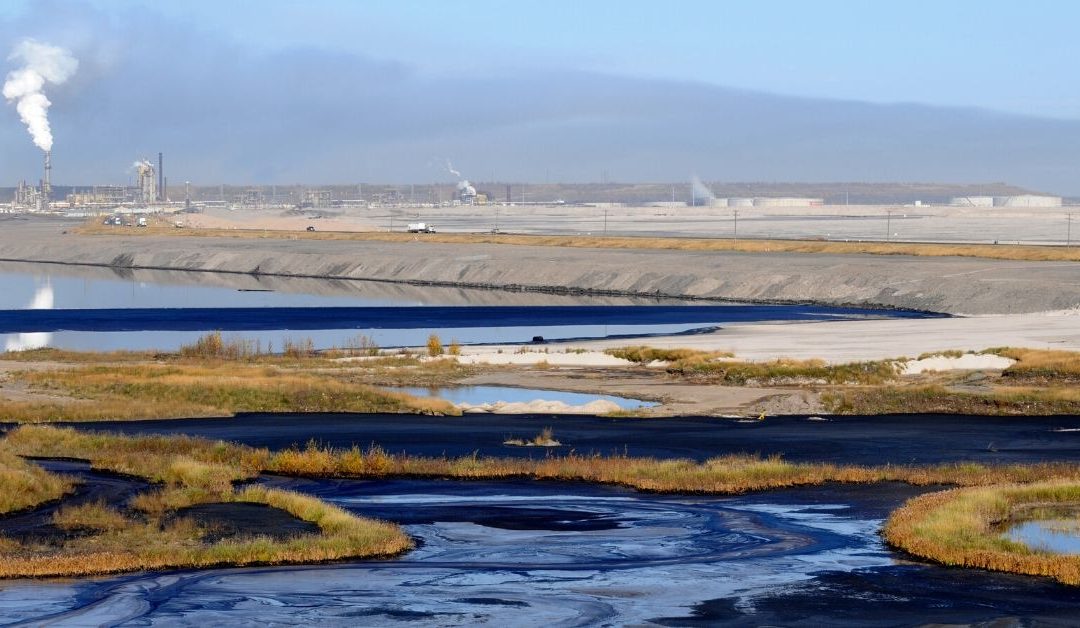
Lagoon System: 0.01 MGD
Managing Sludge Accumulation in Wastewater Lagoons
Municipal wastewater lagoons can experience significant sludge and solids accumulation over time.
Wastewater entering lagoon systems often contains high concentrations of organic material. When the existing microbial population cannot break down this material efficiently, solids can accumulate on the lagoon bottom.
Excess sludge can reduce treatment capacity, increase maintenance requirements, and eventually lead to costly dredging.
Bioaugmentation can be used to support biological solids degradation by introducing concentrated populations of heterotrophic wastewater bacteria into the treatment system.
The following case study describes the use of BioLynceus® ProBiotic Scrubber® II (PBII) to reduce accumulated sludge in a municipal wastewater lagoon system.
Excessive Sludge in a Three-Pond Lagoon System
A small Wyoming municipality serving approximately 300 residents was experiencing excessive solids buildup in its wastewater lagoons.
The 0.01 MGD wastewater treatment system consisted of three treatment ponds and regularly received organic loads that were not being completely degraded by the existing microbial community.
The system also lacked headworks equipment to remove larger solids before wastewater entered the lagoons.
As solids accumulated, the sludge layer gradually reduced the available wastewater holding and treatment capacity of the ponds.
Using Bioaugmentation to Reduce Lagoon Sludge
To improve solids degradation and potentially reduce future dredging requirements, facility management contacted BioLynceus® for a biological treatment strategy.
ProBiotic Scrubber® II was selected to introduce a diverse consortium of wastewater bacteria into the system.
Daily doses of PBII were drip-fed into the wastewater collection system through a drain in the city hall basement, allowing the microbial treatment to enter the wastewater well upstream of the lagoon system.
Measurable Sludge Reduction Over Two Years
Over two years of treatment, operators observed measurable reductions in accumulated solids in both the first and second lagoons.
In Lagoon 1, the sludge layer was biologically reduced by an average of approximately 4 inches over the two-year treatment period.
Lagoon 2 had experienced the greatest solids accumulation.
Sludge profiling showed:
-
An average 3-inch reduction in sludge depth during the first year
-
An additional 5-inch reduction during the second year
-
Continued improvement in lagoon solids management over time
Supporting Biological Dredging in Wastewater Lagoons
The treatment program demonstrated how bioaugmentation can support the biological breakdown of accumulated organic solids in municipal lagoon systems.
By increasing microbial activity, PBII helped the facility:
-
Reduce accumulated lagoon sludge
-
Improve organic solids degradation
-
Recover treatment and holding capacity
-
Reduce dependence on mechanical dredging
-
Support long-term lagoon maintenance
BioLynceus® ProBiotic Scrubber® II can be incorporated into a biological treatment program for wastewater lagoons experiencing sludge accumulation, reduced capacity, or high organic solids loading.
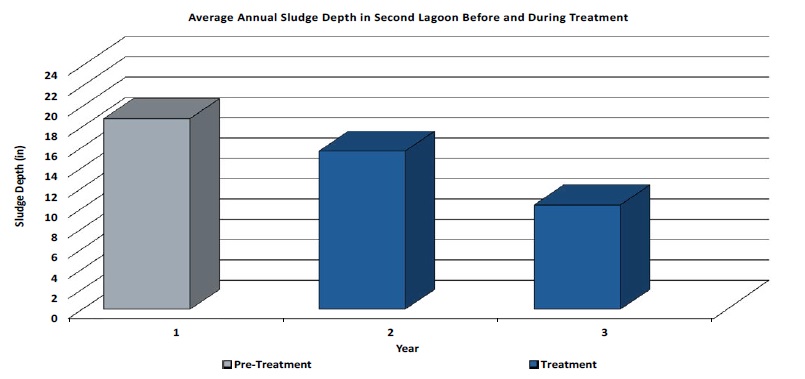
Figure 2. Average annual sludge depth in the second lagoon the year before treatment and two years during treatment. Average depths were calculated from point measurements collected during sludge profiling.
Changes in Lagoon Sludge During Treatment
During treatment with ProBiotic Scrubber® II (PBII), operators observed noticeable changes in the density and appearance of the sludge in both Lagoon 1 and Lagoon 2.
The accumulated sludge became less dense and changed from a dark black color to a lighter brown.
These changes were consistent with increased biological activity and improved decomposition of organic material within the lagoons.
As the sludge became less compact, wastewater microorganisms had greater access to the accumulated organic material, supporting continued biological solids degradation.
Increasing Lagoon Capacity Without Mechanical Dredging
Bioaugmentation helped reduce accumulated sludge and recover treatment capacity without mechanically dredging the lagoons during the treatment period.
While PBII was being applied, no accumulated solids were manually removed from the ponds.
As sludge depth decreased, additional lagoon volume became available for wastewater treatment and storage.
This provided the municipality with a biological approach to lagoon sludge management while delaying the need for conventional mechanical dredging.
More Than $63,000 in Estimated Dredging Cost Savings
Third-party calculations estimated that mechanically dredging both lagoon cells before treatment would have cost approximately $137,936.
After two years of PBII treatment and measurable sludge reduction, the estimated dredging cost decreased to approximately $74,576.
This represented an estimated dredging cost reduction of more than $63,000.
During the same two-year period, the municipality spent approximately $7,000 on PBII treatment.
Based on these estimates, the reduction in accumulated solids provided substantial value compared with the cost of the biological treatment program.
Continuing Biological Lagoon Sludge Management
Because of the measured sludge reduction and associated cost savings, the municipality continued using BioLynceus® products as part of its biological dredging and lagoon maintenance program.
Overall, treatment with ProBiotic Scrubber® II helped:
-
Reduce accumulated lagoon sludge
-
Increase available treatment and holding capacity
-
Support biological solids decomposition
-
Delay mechanical dredging
-
Reduce estimated dredging expenses
-
Improve long-term lagoon solids management
Reduce Accumulated Lagoon Solids with ProBiotic Scrubber® II
BioLynceus® ProBiotic Scrubber® II is designed to support biological sludge reduction, lagoon solids management, wastewater treatment capacity, and reduced dependence on mechanical dredging.
Reference
-
Gerardi, M. (2016). Wastewater Bioaugmentation and Biostimulation. Lancaster, Pennsylvania: DEStech Publications, Inc., p. 117.