
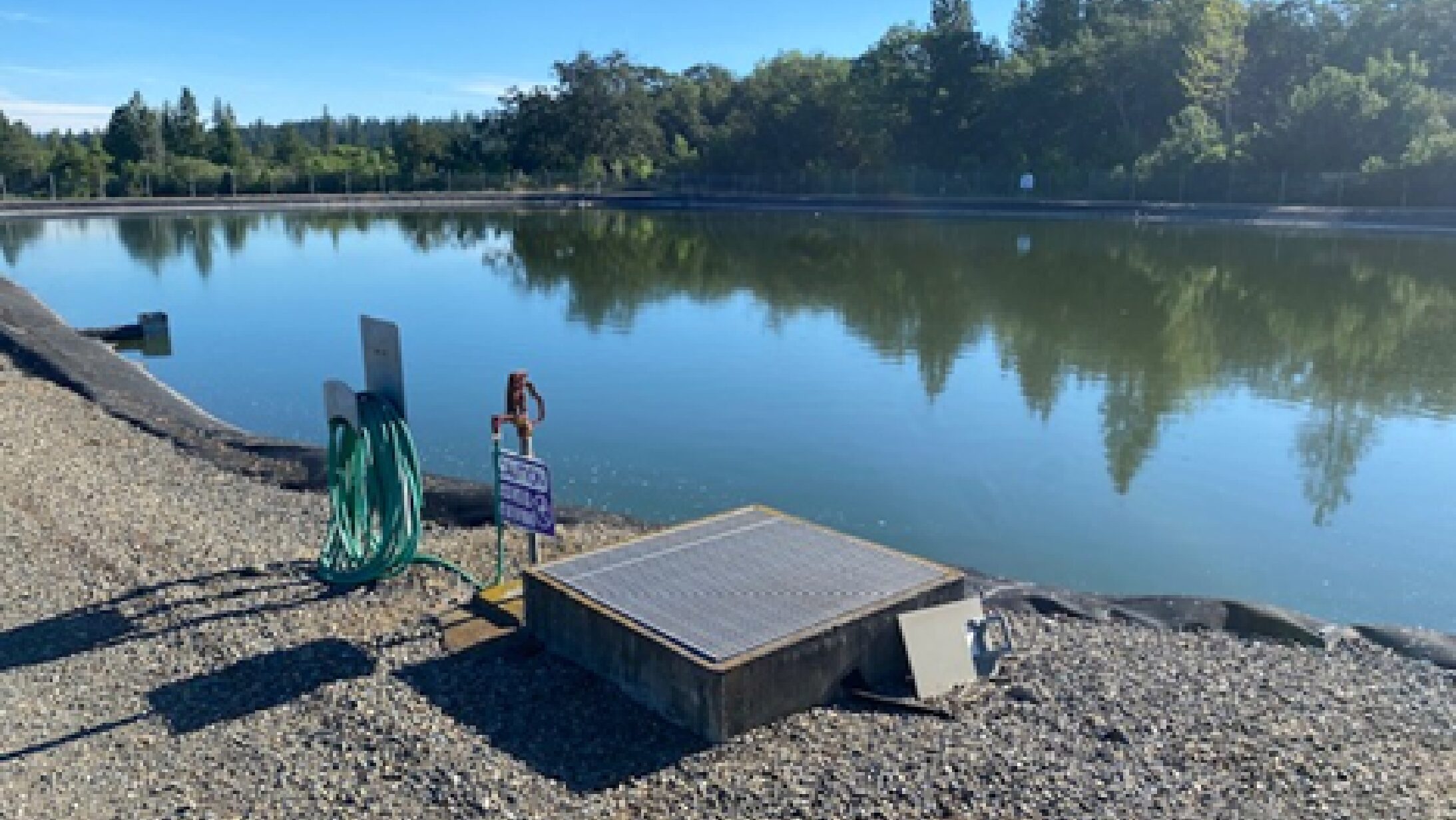
City of Cave Junction Lagoon Sludge Reduction Case Study
Client: City of Cave Junction, Oregon
Application: Wastewater Lagoon Sludge Reduction
Product: BioLynceus® ProBiotic Scrubber® II (PBII)
Lagoon Sludge Accumulation
The wastewater lagoons serving the City of Cave Junction, Oregon, had not been mechanically dredged since 1998.
After more than two decades of operation, accumulated sludge was approaching levels that could reduce available lagoon treatment capacity.
Rather than immediately proceeding with mechanical dredging, the city began evaluating a biological approach to reduce the accumulated organic solids.
BioLynceus® recommended using ProBiotic Scrubber® II (PBII) as part of a biological sludge-reduction program.
Applying ProBiotic Scrubber® II
The City of Cave Junction began applying PBII in April 2021.
The product was hand-dosed directly at the lagoon inlet near the decant area.
The initial application program consisted of:
-
¾ gallon for the initial dose
-
¼ gallon every other day for continued treatment
This application strategy was designed to introduce additional microorganisms into the wastewater system and support the biological degradation of accumulated organic sludge.
Measured Reduction in the Sludge Blanket
Before treatment, the lagoon had a sludge blanket measuring approximately 9 feet, with about 3 feet of water above the accumulated solids.
By August 4, 2022, sludge measurements ranged from approximately 3.5 to 5 feet.
Based on these measurements, the city observed a substantial reduction in accumulated sludge during the treatment period.
Approximately 50% Sludge Reduction
According to the project representative, treatment with BioLynceus® PBII resulted in approximately a 50% reduction in the lagoon sludge blanket.
The observed reduction helped the City of Cave Junction:
-
Reduce accumulated lagoon sludge
-
Recover available treatment capacity
-
Delay the need for mechanical dredging
-
Reduce potential dredging and sludge-disposal costs
-
Improve long-term lagoon solids management
Reducing Dependence on Mechanical Dredging
Mechanical dredging can require specialized equipment, dewatering, transportation, and sludge disposal.
By reducing organic solids biologically, the City of Cave Junction was able to postpone mechanical dredging during the treatment period.
This case study demonstrates how biological sludge reduction with ProBiotic Scrubber® II can be incorporated into a wastewater lagoon maintenance program when conditions are appropriate.
Author: Ken Navidi
Bainbridge Associates – Representative for BioLynceus®
The results described above reflect measurements and observations from this specific wastewater lagoon application. Results may vary depending on lagoon design, sludge composition, temperature, organic loading, treatment duration, and operating conditions.