
Freshwater Pond Treatment: 1.5 Acres, 6–8 Feet Deep
Excessive algae and aquatic weed growth can reduce water clarity and create ongoing maintenance challenges in freshwater ponds.
Warm water temperatures, elevated nutrient levels, and high organic matter content can create favorable conditions for rapid algae and aquatic plant growth. As organic material accumulates on the pond bottom, nutrients may continue to recycle into the water and contribute to recurring water quality problems.
Using Bioaugmentation to Reduce Organic Solids and Nutrients
Bioaugmentation can help increase microbial activity at the sediment-water interface, where organic solids often accumulate.
By supporting the biological breakdown of this organic material, bioaugmentation may help reduce nutrient availability and improve overall pond conditions.
The following case study describes the use of BioLynceus® ProBiotic Scrubber® I (PBI) in a 1.5-acre freshwater pond with a depth of approximately 6 to 8 feet.
The treatment program was designed to help reduce organic solids and excess nutrients while supporting improved water clarity and overall freshwater pond health.
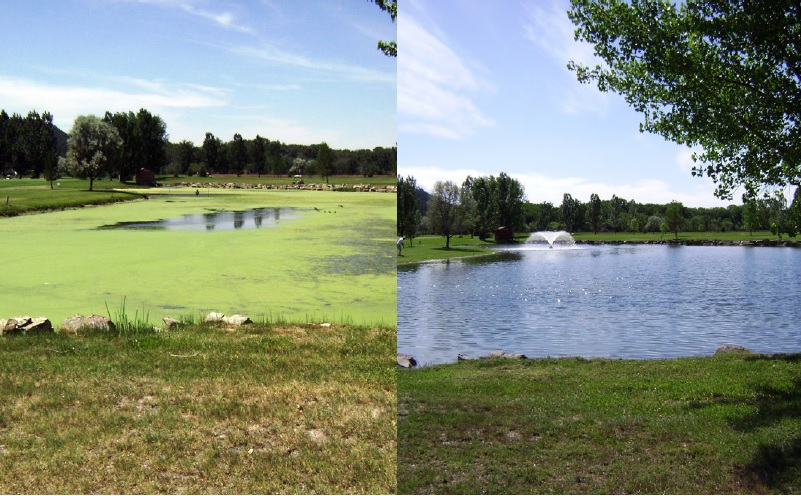
Figure 1. Open water pond at case study site without (left) and with (right) BioLynceus® PBI treatment with added organic acids. Water clarity was improved in the pond during bioaugmentation.
Freshwater Pond Water Quality Challenges
A golf course and recreation center in Montana was having difficulty maintaining water clarity in a 1.5-acre freshwater pond from spring through fall.
The pond received nutrient-rich water from two primary sources. Approximately half of the inflow consisted of treated effluent from the town’s wastewater treatment plant, while the remaining water was diverted from the Yellowstone River.
Agricultural runoff entering the watershed contributed additional nitrogen and phosphorus, increasing the nutrient load entering the pond.
Excessive Algae and Duckweed Growth
The shallow depth of the pond, combined with elevated nutrient levels, created favorable conditions for excessive algae and duckweed growth.
As plant and algal biomass accumulated, it began interfering with the pond’s mechanical systems.
The suspended biomass restricted:
- Fountain aeration
- Irrigation water intakes
- Water circulation
- Overall pond appearance
Golf course management needed a practical way to reduce algae and duckweed while improving long-term pond water quality.
Using Bioaugmentation to Reduce Organic Solids
BioLynceus® developed a freshwater bioaugmentation program designed to reduce accumulated organic solids at the sediment-water interface.
ProBiotic Scrubber® I (PBI) was first applied to the pond in April. Additional treatments were then applied twice each week.
PBI introduced a diverse community of beneficial bacteria selected to support organic solids decomposition and nutrient cycling within the pond.
A small amount of organic acid was also applied with PBI to support heterotrophic bacterial activity.
Improved Water Clarity Along the Pond Edges
Within the first several months of treatment, management observed improved water clarity along the outer edges of the pond.
Over time, the visible improvement progressed from the shoreline toward the center of the water body.
The added microorganisms initially targeted organic material accumulated near the pond banks. Reducing this material helped decrease the amount of sludge and associated nutrients available to support excessive algae and duckweed growth.
Pond Conditions Declined After Treatment Stopped
The biological treatment program continued to improve pond conditions, but new management discontinued the program midway through the second treatment season.
After treatment stopped, pond water clarity declined.
The following spring, ProBiotic Scrubber® I was reintroduced to the pond in an effort to reproduce the previous results.
Once again, management observed improved water clarity following bioaugmentation.
Seven-Month Freshwater Pond Treatment Results
Over the seven-month treatment period, from April through November, algae and duckweed biomass decreased while water clarity improved throughout the pond.
The BioLynceus® treatment program helped:
- Reduce accumulated organic material
- Improve pond water clarity
- Decrease algae and duckweed biomass
- Support nutrient management
- Improve conditions for fountain aeration and irrigation equipment
The case study demonstrates how biological freshwater treatment can help manage organic solids and nutrient-related water quality problems in shallow ponds.
Support Freshwater Pond Clarity with ProBiotic Scrubber® I
BioLynceus® ProBiotic Scrubber® I is designed to support freshwater pond clarity, organic solids reduction, nutrient management, and healthier biological conditions.